

Styles of Hearing Aids
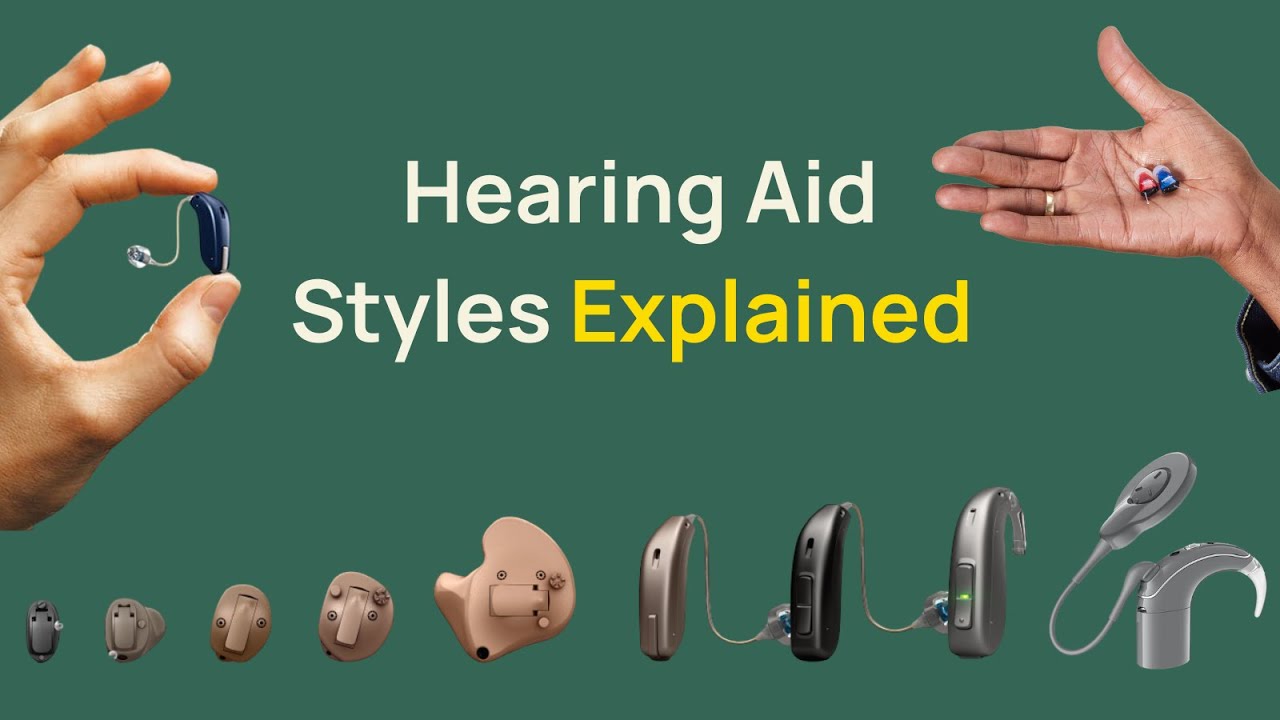
The following are common hearing aid styles, beginning with the smallest, least visible in the ear. Hearing aid manufacturers keep making smaller hearing aids to meet the demand for a hearing aid that is not very noticeable. However, smaller hearing aids cannot be made powerful enough to give you the necessary loudness that you would need.
|
COMPLETELY-IN-THE-CANAL (CIC) or mini CIC
|
|
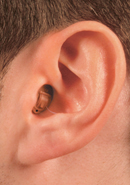 |
A completely-in-the-canal hearing aid is molded to fit inside your ear canal. It improves mild to moderate hearing loss in adults. A completely-in-the-canal hearing aid:
|
|
IN-THE-EAR (ITE)
|
|
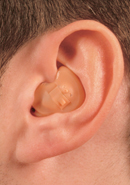 |
An in-the-ear (ITE) hearing aid is custom made in two styles — one that fills most of the bowl-shaped area of your outer ear (full shell) and one that fills only the lower part (half shell). These can be fit on people with mild to severe hearing loss. An in-the-ear hearing aid:
|
|
BEHIND-THE-EAR (BTE)
|
|
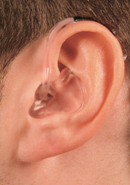 |
A behind-the-ear (BTE) hearing aid hooks over the top of your ear and rests behind the ear. A tube connects the hearing aid to a custom earpiece called an ear-mold that fits in your ear canal. This type is appropriate for people of all ages and those with almost any type of hearing loss. A behind-the-ear hearing aid:
|
|
RECEIVER-IN-CANAL (RIC) or RECEIVER-IN-THE-EAR (RITE)
|
|
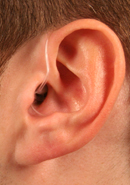 |
The receiver-in-canal (RIC) and receiver-in-the-ear (RITE) styles are similar to a behind-the-ear hearing aid with the speaker or receiver in the canal or in the ear. A tiny wire, rather than tubing, connects the pieces. A receiver-in-canal hearing aid:
|