
Hearing aid fitting And Selection
Introduction
Hearing aid selection and fitting is a two-step process: first, an audiologist matches a device to your specific hearing loss, lifestyle, and budget; then they physically program and verify it using real ear measurement (REM) so the amplification matches your actual ear canal, not a generic setting.
At Excel Audiology in Royal Oak, MI, this typically spans one selection visit, a Hearing Aid Delivery and Orientation (HADO) appointment, and a two-week follow-up.
If you’ve been told you need hearing aids, you probably have more questions than answers right now. That’s normal — most people don’t know this process happens in stages, or that “fitting” means something far more technical than just picking a color and going home. Here’s what genuinely happens, and why skipping steps costs you sound quality later.
Who Actually Needs a Hearing Aid?
Hearing aids are typically recommended for people diagnosed with sensorineural hearing loss (SNHL) — damage to the inner ear or auditory nerve — or conductive hearing loss where surgery isn’t a realistic option. If your recent hearing test showed either of these, a hearing aid isn’t a lifestyle upgrade; it’s the standard clinical next step.
How Do Audiologists Choose the Right Hearing Aid for You?
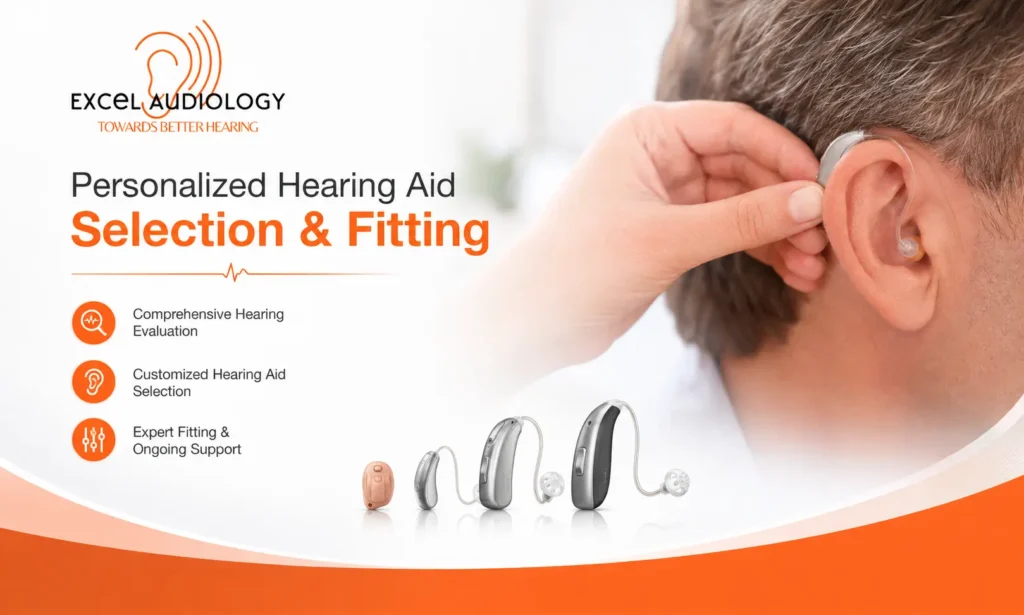
Choosing a hearing aid isn’t about picking the “best” brand — it’s about matching device technology to your audiogram, ear anatomy, dexterity, and daily environment. Your audiologist will walk you through hearing aid styles (CIC, ITE, BTE, RIC), major manufacturers like Phonak, Signia, and ReSound, and — in most cases — let you try a recommended pair before committing.
Three things usually decide the shortlist:
- Degree and shape of your hearing loss — steep high-frequency loss needs different processing than flat loss across all pitches
- Manual dexterity and vision — tiny in-canal devices aren’t ideal if changing batteries or adjusting settings is a struggle
- Listening demands — a retired homebody has very different needs than someone in noisy meetings or on the phone all day
What Happens at Your Hearing Aid Delivery and Orientation (HADO) Appointment?
Your HADO appointment is where the selected hearing aids are physically fitted, verified with REM, and programmed to your ears, followed by hands-on training on daily use, cleaning, and troubleshooting.
You’ll also get honest counseling here — hearing aids restore access to sound, but your brain needs a short adjustment period to relearn how to process it. Setting realistic expectations at this stage prevents the “these don’t work” frustration that leads people to abandon devices they never gave a fair trial.
What Happens After Fitting? The Follow-Up Visits
A conformity follow-up is scheduled about two weeks after HADO to fine-tune settings based on your real-world experience — the volume that felt right in a quiet clinic room often needs adjusting once you’re back in traffic, restaurants, or family dinners.
Additional maintenance and repair visits are scheduled as needed, and most patients settle into their optimal settings within one to three follow-ups.
What About Cost?
Hearing aids are a real investment, and Excel Audiology offers Care Credit and in-office, no-interest payment plans specifically so cost doesn’t delay treatment. Ask about current plan options when you book your evaluation.