
Bluetooth Hearing Aids: What They Are, How They Work & Are They Worth It?
Introduction
If you’ve been looking into hearing aids lately, you’ve almost certainly seen the word “Bluetooth” thrown around. The technology is worth understanding — because it’s changed what hearing aids can actually do for people in day-to-day life. Whether you’re stepping into an audiology clinic for the first time or upgrading from an older pair, here’s everything you need to know.
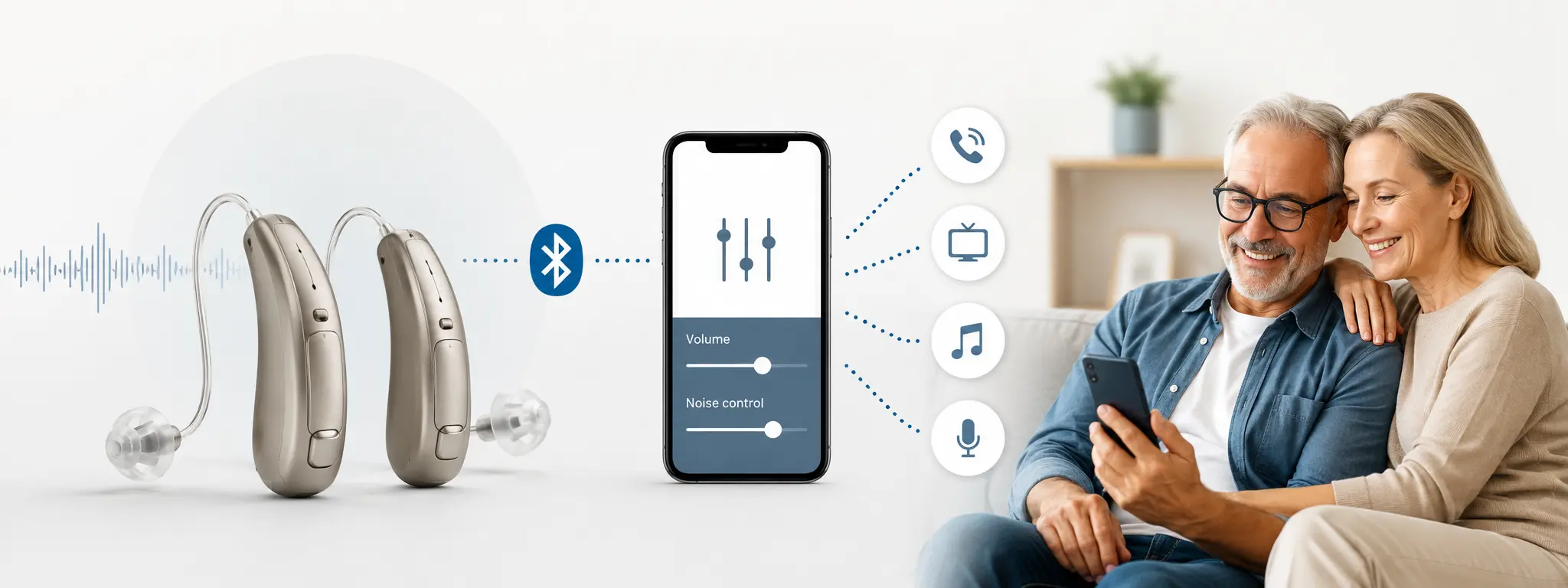
Bluetooth Hearing Aids are wireless hearing devices that connect directly to compatible smartphones, TVs, tablets, and other electronics via Bluetooth. Instead of struggling to hear audio through a tiny external speaker, the sound streams straight into both ears — giving you a cleaner and richer sound.
How Do They Actually Work?
Think of Bluetooth hearing aids the way you think about wireless earbuds — except they’re amplifying the world around you and streaming audio at the same time. Most modern pairs use Low Energy Bluetooth (LE BT), which keeps your battery from draining too fast while maintaining a stable connection with your compatible phone, TV streamer, or smart home device.
Once paired, a phone call comes in and the audio routes straight into your ears in stereo. You hear the caller clearly through both ears. The hearing aids’ microphones simultaneously keep picking up the sounds around you — the kettle boiling, your dog barking — so you’re never cut off from the real world. (this can be adjusted based on your preference)
The Real Benefits — and Why People Love Them
Here’s what most people notice pretty quickly after switching to Bluetooth-enabled hearing aids:
📞Crystal-clear phone calls
Audio goes directly into both ears — no more pressing the phone hard against your head.
📺TV at a normal volume
Stream TV directly through your hearing aids without having to turn up the volume
📱Discreet app control
Adjust volume and noise settings from your phone without touching your ears. The app control feature gives you flexibility in controlling your hearing aids. Most brands — Phonak, Oticon, Resound, Signia, etc. – let you fine-tune settings through an app. If you’re walking into a noisy restaurant, you can quietly switch your hearing aids to a “restaurant” program before you even sit down. No fumbling with tiny buttons.
🎵Music & podcasts
Enjoy your favorite content in high-quality stereo, wherever you are.
Important Considerations When Choosing Hearing Aids:
Not all Bluetooth hearing aids are built the same, so it helps to know what questions to ask before you commit. Here are the big ones:
-
iPhone vs. Android compatibility:
Some hearing aids use Made for iPhone (MFi) technology, which gives you a rock-solid, direct connection to Apple devices. Android compatibility has caught up a lot in recent years thanks to Audio Streaming for Hearing Aids (ASHA) protocol and later Low Energy BT audio, so it’s worth confirming that your phone will pair seamlessly with your chosen aids.
-
Battery life:
Streaming eats battery faster than regular use. If you watch a lot of TV or take many calls through your hearing aids, look for rechargeable options with at least 16–18 hours of rated battery life. A charging case you can take on the go is a nice extra.
-
Range and reliability:
Most Bluetooth hearing aids maintain a good connection up to around about 30 feet. You may need to take that into consideration if you are moving from one room to another while streaming a phone call or music.
-
Learning curve:
If you’re not particularly tech-savvy, setting up Bluetooth pairing and managing an app can feel a little overwhelming at first. The good news: most audiology clinics (including ours) walk you through the whole setup and offer follow-up support.
-
Who Are Bluetooth Hearing Aids Best For?
They’re a great fit for pretty much anyone with hearing loss — but especially if you:
- Frequently talk on the phone for work or with family
- Listen to music and podcasts frequently
- Want discreet, on-the-fly control over your hearing aids
- Value staying connected to smart home devices and assistants
- Have an active lifestyle and want a hands-free experience
Remember that….
Bluetooth technology is not essential for the functioning of your hearing aids. It is a feature that can be turned on or off based on your preference. The successful functioning of your hearing aids will depend on recommended technology and based on how the aids are programmed. It is also important to keep your hearing aids clean and wear them all day every day for your brain to adjust to the amplification. For more information call us at 248-549-9035.