
The Hidden Link Between Hypertension and Hearing Loss
Introduction:
If you’ve been diagnosed with high blood pressure, your doctor probably warned you about your heart, your kidneys, maybe your eyes. But here’s something that rarely comes up in that conversation: your ears are on the list too.
It sounds strange at first. Blood pressure and hearing don’t seem related — one’s about your cardiovascular system, the others about sound waves and tiny bones in your ear. But once you look at how the ear actually works, the connection makes a lot more sense. And it’s a connection worth knowing about, because catching it early can genuinely change how well you hear ten or twenty years from now.
Does High Blood Pressure Cause Hearing Loss?
Yes, research shows a real association between hypertension and hearing loss, especially sensorineural hearing loss at higher frequencies. Multiple clinical studies and meta-analyses have found that people with hypertension are more likely to have measurable hearing loss than people with normal blood pressure, and the effect seems to get stronger as blood pressure severity increases. One large cross-sectional study of over 270,000 workers found a substantial link between hypertension and increased hearing thresholds, with the effect notably higher among people with grade 2 hypertension.
Why Your Ears Are So Sensitive to Blood Pressure Changes
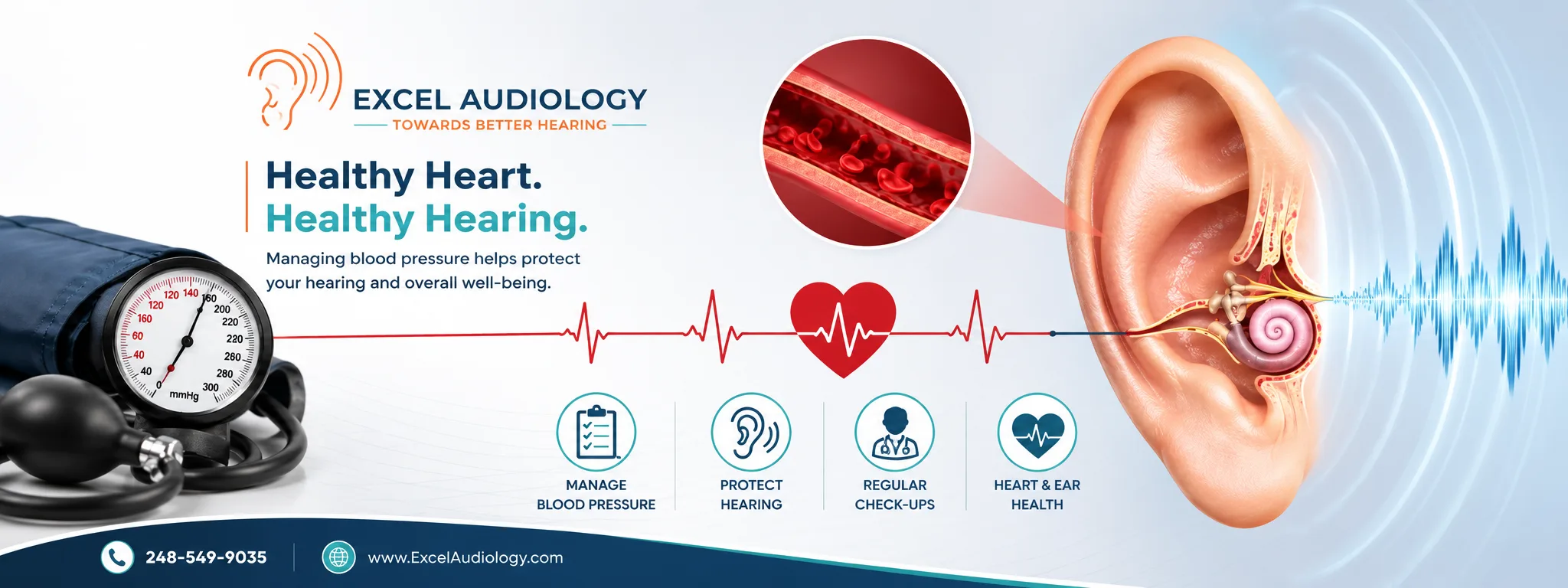
Your inner ear is basically a tiny, delicate machine that runs on blood flow. The cochlea — the spiral-shaped structure that turns sound vibrations into signals your brain can understand — depends on a rich, steady supply of blood through some of the smallest vessels in your entire body. When those vessels get damaged, the cochlea is one of the first places to feel it.
Researchers have pointed to a few specific mechanisms: hypertension can disrupt the inner ear’s potassium recycling process, and it can lower oxygen levels within the cochlea itself. Think of it like a plant that needs consistent water. Cut off the supply even a little, and the most sensitive parts start to wilt first — in this case, that’s the hair cells responsible for picking up higher-pitched sounds.
Some researchers also believe hypertension can thicken the blood (a condition called hyper viscosity) and interfere with circulation in the stria vascularis, the tissue that keeps the inner ear’s electrical environment balanced. Combine that with normal age-related wear and tear, and hypertension basically speeds up a process that was already happening — researchers describe it as an accelerating factor in age-related hearing decline.
What the Research Actually Shows?
This isn’t a fringe theory. It’s been studied from multiple angles:
-
Large population studies.
One study of over 500 patients found that the proportion of people with hearing loss was significantly higher in the hypertensive group compared to those without hypertension, even after accounting for other cardiovascular risk factors.
-
Occupational noise studies.
In workplaces with loud noise exposure, hypertensive workers showed measurably worse hearing outcomes than their non-hypertensive coworkers doing the exact same job.
-
Stroke connection.
Research from the American Heart Association found that people with sudden, severe hearing loss were about 150% more likely to have a stroke within the next two years — a sobering reminder that hearing loss can sometimes be an early signal of a bigger vascular problem, not just an ear issue.
To be fair, the research isn’t 100% unanimous. Some studies note the link is affected by overlapping risk factors like diabetes, noise exposure, and age, so it’s not always a clean, isolated cause-and-effect. But the overall pattern across dozens of studies points the same direction: uncontrolled high blood pressure is bad news for your hearing.
Signs You Shouldn’t Ignore
If you have hypertension, keep an eye out for:
- Trouble following conversations in noisy places like restaurants
- Frequently asking people to repeat themselves
- Turning the TV up louder than family members prefer
- Ringing, buzzing, or a “fullness” sensation in one or both ears (tinnitus)
- Sounds seeming muffled, especially higher-pitched voices or birds chirping
None of these automatically mean hypertension caused your hearing changes — but if you have high blood pressure and any of these symptoms, it’s worth getting your hearing checked rather than chalking it up to “just getting older.”
What You Can Actually Do About It
The encouraging part: this is a two-way street. Managing your blood pressure well isn’t just protecting your heart and kidneys — it’s protecting your hearing too.
1. Keep your blood pressure controlled.
Medication adherence, regular monitoring, and lifestyle changes (less sodium, regular movement, better sleep) all help protect circulation throughout your body, including your inner ear.
2. Get a baseline hearing test.
If you’re hypertensive, especially if you’re over 45, a hearing evaluation gives you a baseline to track changes over time.
3. Don’t wait for it to get bad.
Hearing loss tends to be gradual, which makes it easy to dismiss. Early detection means more options and a much easier adjustment to hearing aids (in case you need them).
4.Talk to your doctor about the connection.
Be your own advocate for your hearing. If you suffer from hypertension get your hearing checked and get a baseline.