
Blog
The Link between Untreated Hearing Loss and Dementia

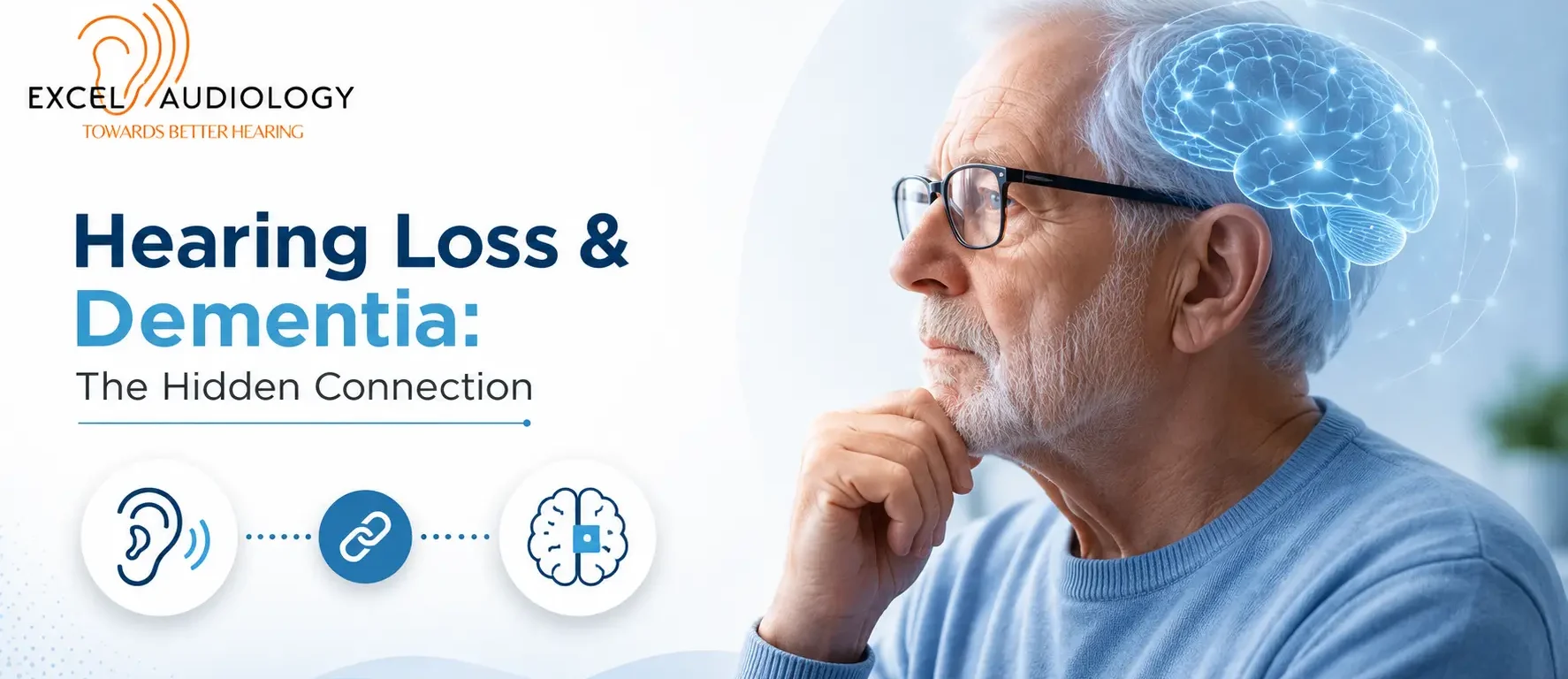
The Link Between Hearing Loss and Dementia Risk
Untreated hearing loss significantly raises your dementia risk — people with severe hearing loss are up to 5 times more likely to develop dementia. But hearing aids actively fight back: research shows they can slow cognitive decline by 48% over 3 years, keeping your brain engaged and protected.
Hearing loss is a common condition affecting millions of older adults worldwide. In the US, it affects 60.7 million people from ages 12 and up. Studies show approximately 28.8 million American adults could significantly benefit from wearing a hearing aid. While often dismissed as a natural consequence of aging, emerging research highlights a more serious implication: a strong correlation between untreated hearing loss and the risk of developing dementia.
Over the past decade, multiple studies have established a compelling association between untreated hearing loss and an increased risk of cognitive decline and dementia. A landmark study by Dr. Frank Lin at Johns Hopkins University found that older adults with moderate to severe hearing loss were significantly more likely to develop dementia over time than those with normal hearing.
The ACHIEVE study by Dr. Lin, found that treating hearing loss with hearing aids, in older adults, who had more risk factors for cognitive decline slowed down loss of thinking and memory abilities by 48% over 3 years. The risk increased with the severity of the hearing loss and the duration of hearing loss that goes untreated: those with severe hearing impairment had up to five times the risk of developing dementia compared to those without hearing loss.
With hearing impairment the brain has to work harder to understand the degraded auditory signal and has to use other areas of the brain in helping hear. This can result in cognitive fatigue and decline over time. Hearing loss can cause difficulties in communication, thus resulting in social isolation and loneliness. These are documented risk factors for cognitive decline. The hearing loss, social isolation and therefore lack of stimulation to the brain can lead to faster atrophy of the brain. This physical degeneration could contribute to dementia.
Encouragingly, emerging evidence suggests that treating hearing loss may mitigate the associated risk of dementia. The use of hearing aids and other assistive listening devices has been associated with better cognitive outcomes in some studies.
A 2023 Lancet Commission report identified hearing loss as one of the top modifiable risk factors for dementia, underscoring the potential for early intervention to make a significant difference.
Hearing aids amplify sounds, while filtering out the background noise thus improving clarity of speech. Today’s hearing aids adapt to your specific hearing loss and listening environments, actively reducing the effort and fatigue of listening.
Hearing aids won’t reverse hearing loss, but regular use keeps the brain engaged with sound — potentially lowering the risk of cognitive decline.