

How does the ear work?
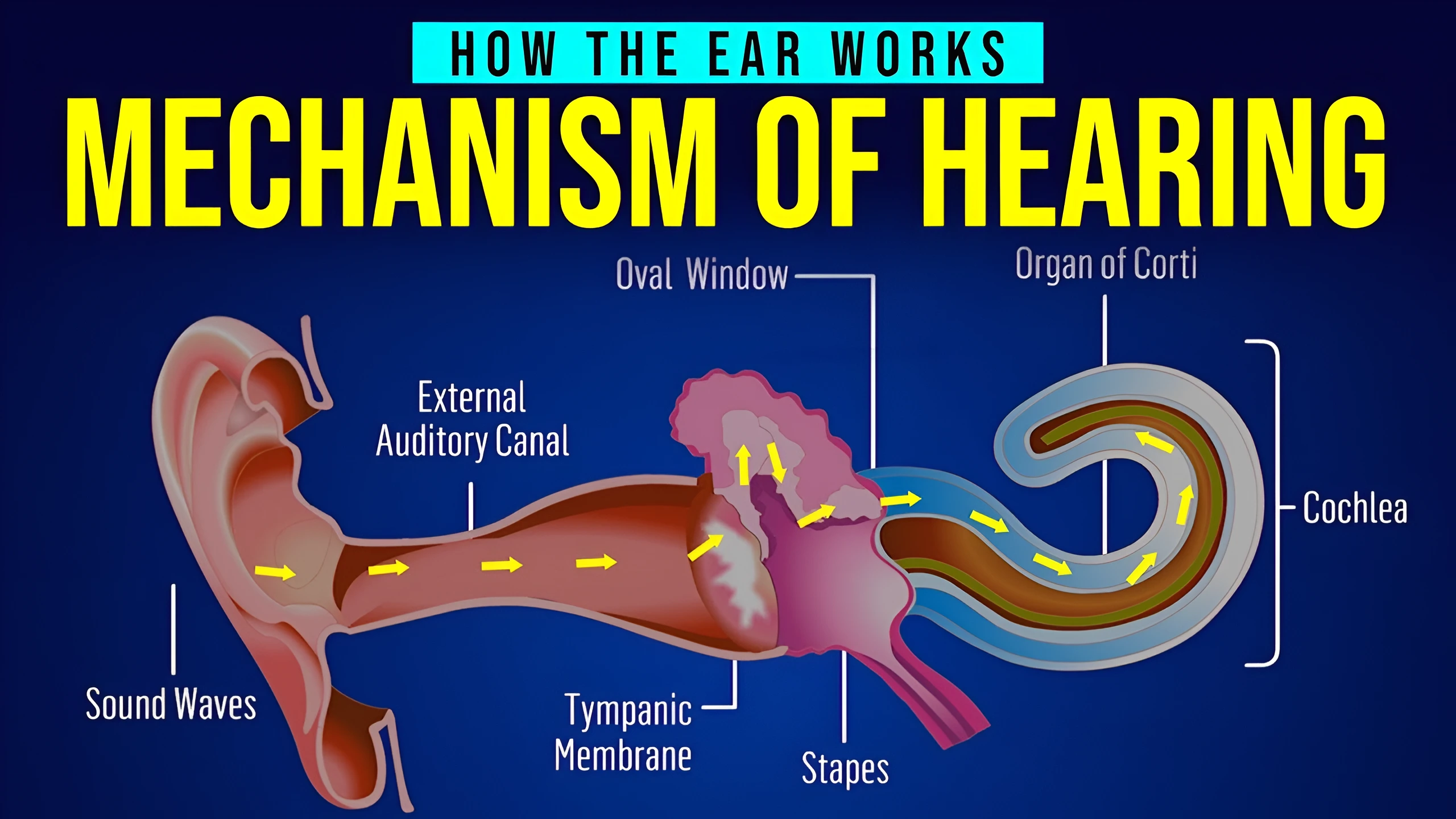
The ear has three main parts:
- The Outer ear (includes the Pinna and External Auditory Canal),
- Middle ear (Tympanic Membrane and the 3 Ossicles)
- Inner ear (Cochlea)
How Does the Ear Work?
The ear has three main parts — the outer ear, middle ear, and inner ear. Sound travels through each part in sequence, converting sound waves into electrical signals that the brain interprets as hearing.
What Does the Outer Ear Do?
The outer ear consists of the Pinna and the External Auditory Canal. The Pinna captures sound waves from the environment and funnels them into the ear canal, where earwax is naturally formed. The ear canal directs sound toward the eardrum, which separates the outer ear from the middle ear.
How Does the Middle Ear Amplify Sound?
The middle ear contains the Tympanic Membrane (eardrum) and three tiny bones called the Ossicles — the Malleus (hammer), the Incus (anvil), and the Stapes (stirrup). When sound enters the ear canal, it causes the eardrum to vibrate. These vibrations cause the three ossicles to move in sequence, amplifying sound and transferring it into the inner ear.
What Is the Role of the Cochlea in Hearing?
The inner ear contains the Cochlea — a fluid-filled, spiral-shaped structure arranged like the keys of a piano. Vibrations from the ossicles create waves in the cochlear fluid. This fluid movement causes thousands of tiny hair cells inside the cochlea to move, converting mechanical energy into electrical impulses. The human cochlea can process frequencies from as low as 20Hz to as high as 20,000Hz.
How Does the Auditory Nerve Send Sound to the Brain?
The electrical impulses generated by the cochlea’s hair cells are carried by the Auditory Nerve directly to the brain. The brain then interprets these electrical signals as recognizable sound — completing the hearing process from sound wave to perceived sound.
What Happens When Any Part of This Process Is Disrupted?
Damage or obstruction at any stage — outer, middle, or inner ear — results in hearing loss. Outer and middle ear problems often cause conductive hearing loss, which may be temporary. Damage to the cochlea’s hair cells or the auditory nerve causes sensorineural hearing loss, which is typically permanent and most commonly treated with hearing aids.
Concerned about your hearing? A diagnostic hearing evaluation at Excel Audiology in Royal Oak, MI can identify exactly where in the hearing pathway the difficulty is occurring. Call 248-549-9035 to schedule with Smita Singh, CCC-A.